Putting the Garden to Bed Without Losing Your Weekend
Every October somebody at church asks me if I close up the garden for winter. I do, but not the way most folks think. I don't strip it bare. A Tennessee winter swings from 60…
by Joyce ·
straw, not hay. hay = weeds.
Every October somebody at church asks me if I "close up" the garden for winter. I do, but not the way most folks think. I don't strip it bare. A Tennessee winter swings from 60 degrees to a hard freeze in two days, and bare soil hates that.
Here's my whole routine. It fits into one Saturday.
1. Pull the sick, leave the healthydo this before the first hard frost
Tomato and squash plants that had blight or powdery mildew go in the trash, not the compost. Healthy bean and pea roots stay put. Snip them at the soil line and the nitrogen nodules stay in the ground.
from the garden, this year
2. Feed the soil before you cover it
I spread an inch of finished compost over every raised bed. If you don't have compost, shredded leaves are fine. The worms will work it in by March.
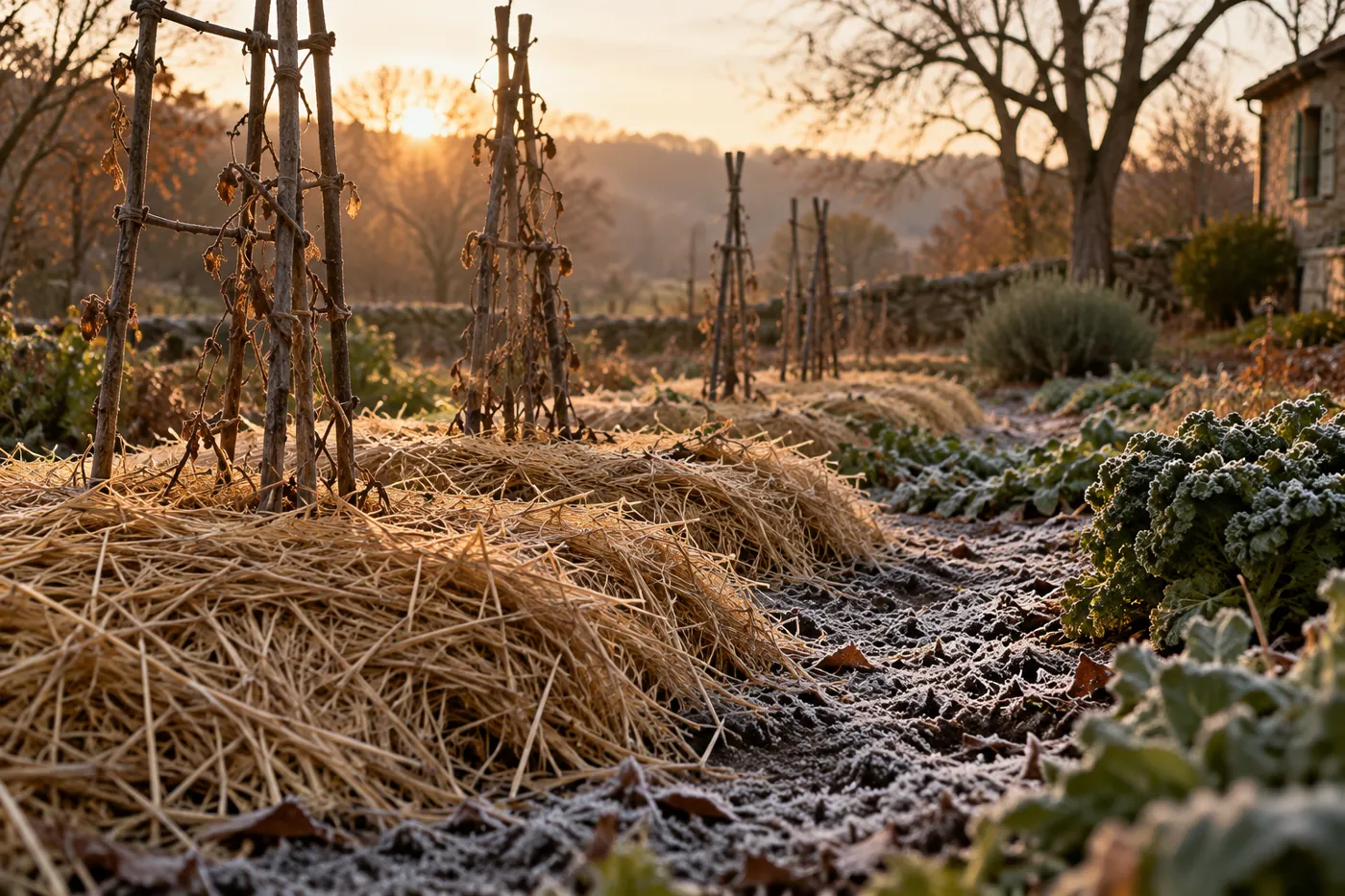
3. Mulch thickstraw, not hay. hay = weeds.
Three to four inches of straw or chopped leaves. That keeps the soil from heaving when it freezes and thaws.
4. Mark what's still growing
Garlic, kale and collards keep going all winter here. I push a painted stick in at the end of each row so nobody steps on them in January.
That's it. One Saturday, and the beds are better in spring than they were in fall.